You’ve decided you’re done replacing shingles every time a storm rolls through, and metal roofing keeps coming up. Then the quotes arrive, and they’re nothing alike. One bidder talks about standing seam, another about corrugated panels, a third about gauge and coatings, and the prices are far enough apart that you start wondering who’s leaving something out.

That uncertainty is fair. A metal roof is a big decision, and two roofs made from the same steel can perform very differently depending on how they’re specified and installed. You should understand what you’re buying before anyone asks for a signature.
APC Roofing has installed and repaired roofs since 2017 across Central Florida, the Daytona Beach area, the Kansas City metro and Springfield, Missouri. We’re GAF Certified, licensed and insured, and your inspection is free. Call 866-995-0704 to have someone look at your roof.
Metal roofing comes in more than one type
“Metal roof” covers several different systems. Each one has its own look, upkeep and trade-offs.
Standing seam
Flat panels run from the ridge to the eave and lock together at raised seams. The fasteners sit underneath, out of the water’s path, on clips that let the panels move as they heat and cool. It’s the cleaner look and the lower-maintenance option, and it costs more up front. Our standing seam metal roofing page goes into the details.
Corrugated and exposed-fastener panels
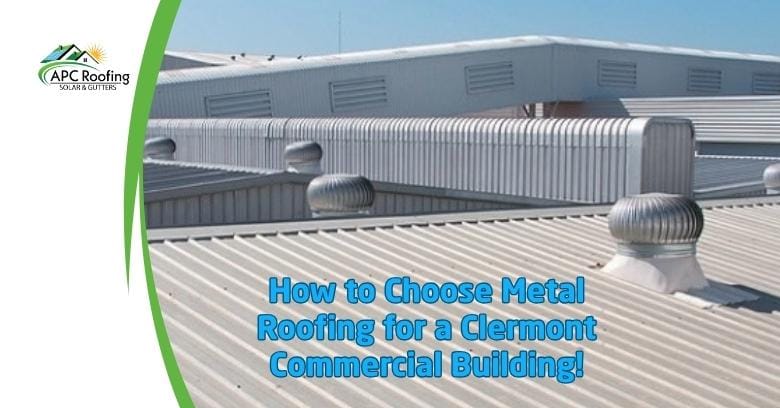
These panels screw straight through the face into the roof structure, and every screw carries a rubber washer that seals the hole. They go on faster and cost less, and those washers need checking every few years. They’re common on shops, porches and outbuildings, and plenty of homes use them too. See corrugated metal roofing for how they work.
Metal shingles and stone-coated steel
Stamped metal shaped to look like shingles, shake or tile. Stone-coated steel adds a granule surface on top. Both give you the durability of metal with a more traditional look, which some neighborhoods and homeowners associations prefer.
What to ask every metal roofing bidder
A metal roof quote should read like a specification. If yours is just a price and a color, ask for these.
Gauge. The scale runs backwards, so a smaller number means thicker metal. As a rough guide, 29 gauge is about 0.014 inches, 26 gauge is about 0.018 and 24 gauge is about 0.024. Thicker panels dent less in hail and feel more solid.
Metallic coating. Steel panels are protected by a zinc or aluminum-zinc coating under the paint. Ask which one and how much.
Paint finish. Higher-grade finishes hold their color and resist chalking much longer than basic ones. On a roof meant to last decades, the finish is usually the first thing to show its age.
Impact rating. Roofing materials are tested for hail under a standard called UL 2218, and Class 4 is the top rating. Some insurers offer a discount for a Class 4 roof, so ask your own carrier before you choose.
Fastening and details. Ask how the panels are attached and what flashing goes at the edges, walls and valleys. That’s where metal roofs leak, not in the middle of a panel.
How our weather affects a metal roof
Florida and Missouri are hard on roofs in different ways, and the right metal system depends on which problem you’re solving.
In Central Florida, the sun runs nearly all year. A light or reflective factory finish sends much of that heat back instead of into your attic. Hurricane season brings wind that pulls hardest at the edges and corners of a roof, so the attachment at the perimeter matters more than anything else. Near the coast around Daytona Beach, salt air attacks cut edges and fastener holes first. That’s one reason aluminum and well-coated steel come up often in coastal estimates.
In the Kansas City metro and Springfield, hail is the big one. Freeze-thaw cycles and winter ice add to it. Thicker panels and a Class 4 rating carry more weight here. Metal also sheds snow quickly, which is good for the roof, but snow sliding off over a door or walkway needs snow guards in the plan.
Who metal roofing suits, and who it doesn’t
Metal is usually a good fit if you plan to stay in your home for a long time, your roof has simple shapes with long runs, or you’re tired of repairing storm damage on a roof that keeps losing pieces.
It’s a weaker fit on a roof cut into many small sections with lots of pipes and other penetrations, where the detail work adds up fast. It’s also a harder sell if you plan to move in a few years, since the extra upfront cost may not come back to you. And if you have a homeowners association, check its rules before you get an estimate.
If metal isn’t the right call, we’ll tell you, and we can talk through shingle or tile instead.
Already have a metal roof?
Most problems on an existing metal roof start at a fastener, a seam or a piece of trim. Backed-out screws, worn washers and loose flashing can often be fixed without replacing panels. Our metal roof repair page covers what that looks like. If you’re getting a new roof, our metal roof installation page explains what a proper install includes.
How it works with APC Roofing
- Book your free inspection. Call 866-995-0704 or request a free online estimate.
- Get a clear, honest assessment and estimate. You’ll see photos of your roof and get a written estimate that spells out the panel type, gauge, finish and details, so you can compare it fairly against any other bid.
- Get your roof done and the site cleaned up. The crew installs your new roof and leaves your property clean.
Financing is available through Aqua Finance, Fortifi, Hearth and Home Run Finance if you’d like to spread out the cost.
Metal roofing questions homeowners ask
Is a metal roof louder in the rain?
On a house with a solid deck, underlayment and an insulated attic, most people don’t notice much difference. Metal over open framing, like on a barn, is a different story.
Does a metal roof make a house hotter?
Usually the opposite. A light or reflective finish bounces back a good share of the sun’s heat, and metal cools off quickly once the sun goes down.
Will hail dent a metal roof?
Large hail can dent metal, especially thinner panels. A dent isn’t always a leak, though. Thicker gauges and Class 4 rated products hold up better, which matters most in Kansas City and Springfield.
Can I put solar on a metal roof?
Often, yes. On standing seam, panels can usually be clamped to the seams. In Florida, APC offers solar through a licensed solar partner, so you can ask about both at your inspection.
Does a metal roof cost more than shingles?
Yes, up front. Whether it’s worth it depends on how long you’ll own the home and what your current roof keeps costing you in repairs. Your estimate will lay out the options side by side.
Make the choice with the full picture
Choosing the wrong system, or the right one installed carelessly, is an expensive way to end up unhappy, and those problems often don’t show up for a few years. A careful look now keeps you from paying for that later.
Call 866-995-0704 to book your free inspection, or start your estimate online. You’ll get a roof that suits your house and your weather, and you’ll know exactly why you picked it. Trust matters.