Trying to find Commercial Roofing in Clermont Florida?
APC Roofing installs and mends membrane and metal coverings on business buildings, taking in the edges, the outlets and every curb.
Call us at 407-270-1129 and a roofer will inspect the whole surface and report back.
Over Stores and Warehouses – the Basics
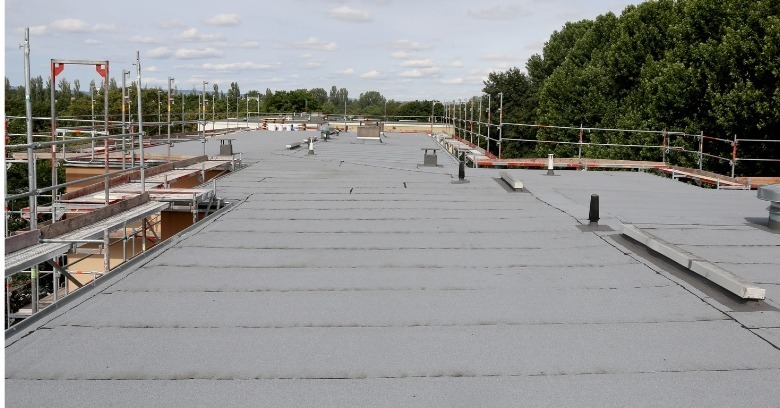
Customers, goods and running machines fill the space beneath the covering, so a small opening can interrupt a full day of trade. The area on top of a big building stretches wide at a very shallow pitch, so drainage and wind resistance are worked out by calculation.
Condensing units, exhaust stacks and antennas are spread across the top, and each support, line or duct gets careful flashing. The activity indoors steers the selection of materials, so a refrigerated plant is specified unlike a clinic.
Kinds of Low-Slope Covering: Options on the Market
Single-ply means one factory-made layer of TPO, PVC or EPDM, modified bitumen is asphalt toughened with polymers and laid from rolls, and built-up roofing stacks felt and hot tar in plies. Thermoplastic seams are welded with heated air, whereas a rubber splice depends on primer and tape.
A commercial kitchen pushes greasy vapor up through the exhaust fans, and EPDM and asphalt swell and weaken beneath oily residue, so PVC usually covers the affected stretch. Built-up plies under a gravel layer make a heavy, durable assembly, because the loose aggregate keeps ultraviolet light off the bitumen.
Panel Roofs on Low Buildings – Details Worth Knowing
Exposed-fastener sheets are secured with screws through the flats, and the threads bite into the purlins beneath. The sealing washers age and harden on a hot, sunny surface, and daily heating and cooling gradually loosen the fasteners.
A standing-seam system uses clips hidden inside raised ribs, and the pans shift slightly through the day. Corrosion sets in at side laps and sawn ends, and a coating over steel that is still sound can slow the damage.
Decking on Big Buildings – What to Check
The way the layers are attached follows from the structure beneath, and a reroof almost never replaces the framing. Formed steel grips a screw well, concrete wants adhesive or expansion anchors, and plywood takes nails or plate fasteners.
Old, slow leaks corrode patches of a metal deck, and a damaged area is removed and a new piece fastened in place. From inside, the underside is inspected wherever the ceiling allows, and small cores from above show the rest.
Anchoring the Membrane: Weighing the Choices
Plenty of commercial sheets are pinned by screws and plates in each overlap, glued-down systems rely on adhesive over the entire back, and ballasted sheets lie free beneath river rock or concrete pavers. The kind of deck, the height and the wind at the site decide the pick, and the framing's spare load capacity limits how much weight can go on top.
Between the plates, a fastened sheet balloons in stiff gusts, but adhered work stays motionless and needs a dry surface to grip. Inspecting a ballasted system takes time, since the stone or pavers must be carried off to reach the laps.
Uplift on a Big Building – Numbers Behind the Pattern
Suction peaks at the corners, since the flow tumbles and speeds up on turning over the edge. A band along each side takes somewhat less, and the interior bears a light load.
The fastening pattern gets denser toward corners and edges, and published wind tables fix the spacing for each height. Skimping on anchors at the outside angle lets the covering pry loose, and air forced underneath keeps widening the opening.
Foam Insulation – an Overlooked Component
Polyiso panels go down over the deck in staggered courses, and a tough cover board over the stack takes foot traffic. Good insulation trims the demand on the HVAC system, and tapered stock tilts the finished surface toward the drains.
Soaked foam gives up most of the thermal resistance, and the heavy mass adds weight and rusts a steel deck. Scanning at dusk, with a few cores for proof, marks out the damage, and every ruined section is replaced rather than covered.
Outlets on a Big Building – Laying Out the Route
Each interior sump wears a cast strainer dome, so debris stays out of the leader below. A clogged grate slows the outflow to a trickle, and a pond spreads across the field.
A raised overflow waits above each primary drain, so a gush at the upper spout means the normal path is shut. An inch of standing water weighs about five pounds per square foot, and water lasting two days suggests a depression or a clogged strainer.
Tracing a Leak – Patience Pays
The mark on a suspended ceiling shows where moisture landed, but the fault on the surface can lie a long way off. The valleys in a steel deck steer seepage lengthwise, and joints between foam panels open more paths.
The roofer works uphill of the stain along laps, curbs and outlets, and electronic leak detection can locate a pinhole. Repairs aimed at the spot directly over the drip tend to miss, and moisture finds a way in at the next storm.
Rooftop Mechanical Units: Where Care Is Needed
A built-up curb lifts each machine above the field, and the covering turns up the sides beneath metal counterflashing. Tight inside corners resist neat work, and any open seam lets rain get behind.
When a heating contractor swaps a machine, an adapter curb often goes on unflashed, and drips show up indoors within weeks. Condensate lines left dribbling onto the membrane grow algae, so the stream ought to be carried to a drain.
Everything Else That Passes Through – the Small Stuff
A preformed boot, cinched with a band, covers each round stack, while odd shapes go into a pitch pocket filled with sealant. Sun and seasons shrink the compound until cracks open, and a top-up is standard upkeep.
Gas lines and electrical conduit should sit on loose blocks, since every screw driven through the sheet is a future leak. Pads cut from spare roofing stock go under each base, and the cushion absorbs rubbing as temperatures swing.
Hinged Covers Up Top: Common Faults
Sunlight slowly turns acrylic bubbles dull and fragile, and the screwed-down rim is where cracks start. Rain slips past a dried gasket or an open frame corner, and the drip is often charged to the covering.
Technicians lift the access hatch many times a year, so the latch, springs and weatherstrip eventually give out. Automatic smoke vents must deploy when heat melts a link, and no roofing work may block the mechanism.
The Low Wall Around the Edge – What Goes Where
Base flashing carries the membrane up the inside face, a termination bar holds the top margin, and metal counterflashing laps down from higher up. A coping cap crowns the parapet and throws rain clear, but an open joint between sections lets storms into the wall below.
Porous brick or block can pass water straight through to the interior, and to anyone downstairs the wet ceiling seems like a roof leak. An inspection covers the coping, the counterflashing and the wall as well as the membrane, and open mortar joints are repointed instead of caulked.
Gravel Stops and Fascia – Wind at the Border
Along the eave, a long cleat grips the hemmed lip of the flange, and a cover strip of membrane is laid over the upper face. Tested wind ratings decide which profile suits a given height, and an undersized section flexes until the metal pulls away.
An eave gutter on a big building collects runoff from a vast surface, and skimpy hangers or leaders lead to overflow and sagging. Trim that is kinked or raised deserves prompt attention, because refastening early lowers the risk of a blow-off.
Visitors Who Are Not Roofers: Protecting the Sheet
Electricians, cable installers and HVAC crews all make regular trips up, and the route wears a visible track into the field. A dropped screw gets pressed through the membrane by the next boot, and a toolbox dragged across the top tears the surface.
Heavy walkway pads laid along the route show where to tread, and wear ends up on material built for foot traffic. Contracts with service firms can spell out where crews may walk, and screws and scraps can be bagged and taken down.
Scheduled Inspections: Small Jobs Kept Small
A commercial covering should get a professional walk-through twice annually, and heavy wind is reason for an extra check. Routine care lifts and empties each strainer, a probe is drawn along each lap, and hardened sealant is noted for redoing.
Preparing for the stormy months means close scrutiny of outlets and perimeter metal, and a follow-up hunts for whatever a harsh stretch of weather pulled apart. Little defects go into a log, each tied to a spot on the plan, so decisions can be made calmly and in advance.
Roof Records: Knowledge That Lasts
A clear drawing pins down the position of each unit, drain and hatch, and a section view names each material from deck to membrane. Photos with dates accompany every repair entry, and cut samples and infrared findings get appended.
Plenty of older buildings arrive with no history at all, and each roofer who climbs up has to investigate afresh. Roof records belong with the building, not with whoever did the work, so a later buyer or manager starts out informed.
Fix, Refresh or Rebuild: Reading the Evidence
A sound membrane with a handful of local faults simply gets patched, and a weathered surface that is still dry can take a fresh liquid layer. Insulation ruined over broad areas points to tear-off, and so do seams that have turned brittle everywhere, but the calendar alone is no verdict.
A liquid coating needs a scrubbed surface and sound mending beneath, since damp layers below stay hidden and soggy. Now and then the answer is replacing just the spoiled sections, when the surrounding field is still performing.
Reroof Paths – Picking a Direction
A recover lays new membrane over what is already there, and a cover board separates the surfaces. An overlay is allowed by code over no more than a single existing covering, and only over dry insulation.
A full tear-off removes every layer, right down to bare metal or concrete, so rusted or soft decking gets fixed in the open. A new tapered layout can shed standing water, and saddles between drains steer water sideways.
Clues Around the Building – Before Leaks Spread
- Rain gushing out of the high overflow, which betrays a choked everyday outlet.
- A brown ring overhead that widens with each downpour, which indicates water reaching the interior.
- Blotches or efflorescence on brick under the coping, which can point to seepage passing through the masonry.
- Fascia metal that flutters or rattles in a gust, which can expose the border to uplift.
- A ceiling that sags or bows between the joists, which may reflect a depression or a sluggish drain.
- A skylight whose plastic has turned chalky, which may give way under a misstep.
- Rust spots spreading on the underside of a steel deck, which often traces back to a lap or a curb.
- A gutter that overflows along the front edge in rain, which can mean a clog or an undersized run.
How APC Roofing Approaches Commercial Roofing in Clermont Florida: the Order of Work
The first thing we examine is each drain, scupper and overflow, and the seams, curbs and edges are next in line. On a leaking building, cores and a meter check the foam, and no recommendation is made until the readings are in.
Everything we find is written up with photographs and a sketch, and every defect is keyed to a location. Our advice names a repair, a restoration or a new system, and each reason is spelled out for the owner.
Commercial Roofing in Clermont Florida – Get the Facts
Reach us at 407-270-1129 and a time to look things over gets agreed.
Sharing the Building – What Gets Agreed
Drilling a steel deck sounds like thunder to everyone below, and adhesive vapors may be pulled in by the air handlers. Noisy tasks are scheduled with the manager's input, and nearby vents can be closed off during curing.
Torn-off material goes down a chute or on a hoist, and anything valuable underneath can be protected. Solvent adhesives carry a strong smell that water-based products lack, so gentle formulas are often specified above working space.
Tie-Ins Between Sections: Planning the Steps
A careful tear-off exposes only what can be dried in before the crew leaves, and each opened area is made tight again as stripping advances. A holding seal ties the completed edge to the untouched field each night, and the stopgap is lifted at the restart.
How much is stripped depends on the weather outlook, and any hint of showers shortens the stretch. A sudden soaking ruins exposed insulation, and runoff may find a path to the offices underneath.
Regional Conditions – Market by Market
At the colder end of our territory, hailstones and drifted snow are real concerns, and denser cover boards with verified beam capacity follow. Intense sunshine in every city we cover breaks a membrane down over time, and light-colored surfaces bounce much of the glare away.
At the coastal end, attachment is engineered for hurricane gusts, and tropical downpours need generous overflow capacity. Some adhesives will not cure below a set temperature, but heat-welded seams tolerate chilly air as long as the deck is dry.
Guarding Against Falls – Measures Worth Having
Many low buildings have no wall at the perimeter to catch a misstep, and anyone close to the edge wears a harness tied to an anchor. Skylight lenses cannot take a body falling onto the plastic, and a wire screen or a rail around every opening stops a plunge.
Permanent anchors make later visits by other trades less risky, and a safety gate at the ladder completes the setup. Our findings mention any guard that is lacking, as a single-story drop can still cause grave harm.
For Commercial Roofing in Clermont Florida, reach APC Roofing at 407-270-1129. A roofer will inspect the drainage, the seams and the flashings, and written findings follow, with the choice left to you.
Verified

Verified
Verified
Verified
Verified