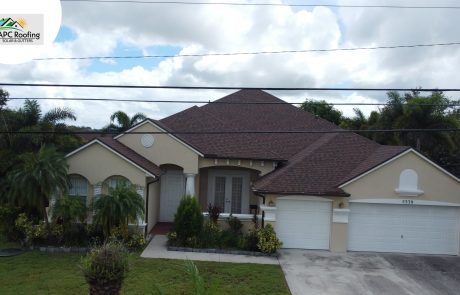
Exploring Tile Roofing on a Home in Palm Coast Florida?
APC Roofing builds, patches and relays coverings of every common shape, treating the underlayment below as part of the job.
Call 386-356-2111 and the answers you get will be in everyday language.
What Sits Over the Attic: The Basics
Rows of clay or concrete pieces carry the bulk of the rain down to the gutters, while a sheet laid over the decking is what actually stops a leak. Gusts can push a little moisture up under the courses during a downpour, and the layer beneath steers that seepage down to the lower edge.
A chipped or broken tile seldom shows up as a drip in a room, since the sheet beneath is normally intact. Moisture that slips through failed underlayment tends to run along the wood for a while, so the mark it leaves can sit well away from the opening.
Material Choices: Differences Worth Knowing
A clay piece starts as earth pressed to a profile and baked, and the color runs all the way through the body. Decades in strong sunlight change its appearance hardly at all, while a properly made unit soaks up almost no rain.
A cement-and-sand mix is molded to a profile and cured to make concrete tile, and on a lot of lines the pigment sits in a slurry near the face. Sun-facing slopes grow paler year by year, and a new chip shows the gray body beneath. A just-installed piece looks brighter than those around it, and the difference narrows over many seasons.
Concrete is thirstier in a rainstorm than fired clay, and at the colder end of our territory, moisture in the body grows as it freezes. Over many seasons that cycle can spall the outer skin, and makers publish a rating for resistance to that kind of wear.
Shapes You Will See – Style and Drainage
A barrel system pairs upturned channels with overturned caps, and the design comes from centuries of Mediterranean building. The S profile merges the hollow and the crown into one molded form, and many recent houses wear this version.
A plank-like flat piece looks like slate or wood shake from the curb, and rain runs over the face of each course instead of along a channel. Rounded designs hold on to needles, twigs and leaves, while a smoother surface lets much less settle.
The Structural Question: Lighter Products Too
Per square foot, standard tile carries several times the pounds of shingles, and a home with tile from day one was built to bear it. Going from a lighter roof to a heavy one adds weight the builder never expected, and a sagging ridge line can be the result.
An engineer needs to confirm what the rafters and supports can carry before that conversion goes ahead, and a few homes call for stiffening before the new covering is laid. Some manufacturers offer a lighter concrete tile, which puts the look of tile within reach of more houses.
Anchoring the Roof – Code and Exposure
A piece can be nailed or screwed through a hole near its head, and plenty of installations hook the courses over wood strips set across the slope. Other roofs rely on a roofing foam adhesive under each tile, and a mortar bed under every unit is used on others. Certain systems add a clip that hooks the nose of each piece, and the maker's instructions and the local code set which combination applies.
Gusts tug most at the outer rows and along the hips and ridge, and attachment there is increased. Toward the coastal end of our territory, hurricane requirements raise the bar for securing each piece, and foam placement and screw counts are specified to comply. A repair has to work with whatever holds the neighboring courses, and a stuck unit ripped free can ruin the adjoining ones.
The Layer Below: Aging and Exposure
Organic or fiberglass felt soaked in asphalt has been the standard for generations, while self-adhered bitumen and synthetics are the newer options. The pocket under the covering stays warm for months and wears on the underlayment, and anything not intended for such exposure turns brittle early.
A tile roof keeps the sun off the felt or synthetic under it, so a knocked-out tile opens a patch that degrades fast. The absence of a leak inside is no reason to leave a missing piece alone, since water passing a weathered membrane soaks into the plywood.
When the Sheet Is Worn Out: Step by Step
A large project on this material often means pulling the pieces by hand and stacking them, after which rotten boards are swapped for sound ones. Fresh underlayment is then spread over the prepared roof, and the saved tile is relaid over it. From the street, the house looks exactly as it did before, while everything that stops water is starting over.
Not every piece survives being moved twice, and aged stock gives way more readily than newer stock. Each new piece has to sit flush with its neighbors, and where the original profile is still in production, an exact match is possible. When a style has been dropped by its manufacturer, salvage or a near equivalent fills the gaps, and a slight difference in shade is common.
Breakage on the Slopes: Reducing the Risk
Plenty of the tile that fails was stepped on, and the one on the roof was frequently installing a dish or cleaning a gutter. A ladder resting on the eave line breaks pieces at the bottom, while a standoff keeps the pressure elsewhere.
A heavy bough dropping onto the slope ruins many tiles at once, and cutting back overhanging growth heads off most of that harm. Large hailstones at the colder end of our territory can split a unit clean through, but modest impacts normally leave no trace.
Walking on Tile – Boards and Routes
The lapped end of each piece bears weight well, but pressure on the middle, with nothing behind it, splits it clean. On barrel and S profiles, a step belongs low in the pan, never on the crown, while repeated trips run over walk boards.
A crack made by a boot often shows only on the underside, and harm accumulates over the years with no one aware. Solar crews and dish installers do well to plan their access with a roofer, and every bracket then rests on flashing rather than on broken tile.
Valleys – Points Worth Knowing
An inside corner takes the drainage of the slopes beside it, and under tile it carries a broad pan of sheet metal. The point where the covering stops sets how wide the exposed band is, and a gap left too slim overflows in a heavy downpour.
Pieces along the edge end up small and often lose their nail holes, and adhesive foam, clips or wire hold them instead. Leaves and needles caught in the channel hold water back, so water finds its way sideways under the covering.
Hip and Ridge Work: Signs of Age
The outside joints where slopes meet are covered by a run of trim, and on many homes it is set in mortar. Heat and cold crack bedding of that kind as it ages, and loose pieces and crumbs of grit follow.
Current practice ties each trim piece to a raised nailer set along the joint, with a flexible closure strip filling the space underneath. Breathable versions double as exhaust vents, and their baffles still keep out rain and insects.
Dormers and Chimneys – Common Faults
The inside corner at a vertical face is lined with bent sheet metal, while a counterflashing tucked in above covers its top. With tile, that flashing is broad at the base and ends in a raised lip, while shortened tile sits clear so runoff drains freely.
Caulk used as a shortcut loses its grip after a few summers, so the same spot takes on water again. Careful work takes the adjacent pieces up and remakes the metal below, and the underlayment along that edge is redone while it is open.
Things That Pass Through – Rubber Boots
Each plumbing stack has a base flashing attached to the underlayment below, with a soft lead or aluminum skirt molded to the tile above. The flat rubber boot sold for shingles will not lie tight on a barrel or S profile, so rain tracks in beneath its flange.
Skylights, attic vents and solar mounts each need flashing made for a tile shape, and anything drilled through a piece without it becomes a leak.
The Lowest Course – Setting the Angle
Where a rolled covering stops at the gutter, every piece ends over an open arch, where birds and wasps nest and blown rain enters if nothing blocks the way. A formed closure is set along the fascia, and drain holes let water run free.
The pieces in the lowest course have no course beneath to tilt them up, so a riser brings them up to match. A flat front row holds water instead of shedding it, and a crooked lower line can be seen from the street.
Thermal Performance – Debris at the Edges
The shape of many profiles, or the battens beneath, holds the covering off the deck, leaving a channel where outside air can flow. Much of the sun's heat leaves with that draft instead of sinking inward, and the sheet below is spared much of it.
During long stretches of hot weather, upstairs remains more bearable, while the weight of the material delays warmth reaching the living areas. An eave stuffed with debris or a ridge closed with mortar cuts off the current, and the cooling benefit is lost wherever nothing can pass.
Growth on the Slopes: Safe Cleaning
Newer concrete sometimes shows a powdery white film called efflorescence, and ordinary rain rinses it off within a few seasons. Growth in the laps traps water against the pieces, and at the colder end of our territory freezing then flakes the face.
Blasting a slope with a pressure washer takes the coating off concrete, and it pushes water past the pieces. A cleaner made for roofs, rinsed off gently, removes growth more safely, while clearing litter from the valleys and gutters by hand prevents damming.
Signs Inside and Out – Worth a Closer Look
- Part of a course has shifted out of line, which points to a broken fastener or a failed bond.
- One opening in a course shows bare underlayment, leaving the layer underneath exposed to daylight.
- Shattered tile is found on the patio after wind, and the break they came from may be out of sight.
- Small lumps of mortar sit near the porch, and the capping above may be working loose.
- A bubbled patch of paint shows on an upper-floor ceiling, and the source is often several feet away.
- Wallpaper lifts or drywall discolors on a wall under a roof junction, which suggests trouble with the flashing there.
- Heavy growth darkens whole sections of the covering, so water lingers where it should run off.
- A low spot shows along the front edge of the covering, and the board under the last course may have softened.
How APC Roofing Takes On Tile Roofing in Palm Coast Florida: Findings You Can Use
An inspection starts with a walk across each slope, and the material, the shape and the way the pieces are set are identified. The valleys, ridges, flashings and eave closures are read one at a time, and a few pieces are lifted where the state of the sheet beneath decides the answer. Indoors, the attic is searched for stains and spongy decking, since dark patches on the wood show past leaks.
Any problem is photographed, and each damaged area is measured. Everything seen goes down in writing, and the reasoning behind each suggestion is spelled out. Broken pieces over a sound sheet are called a repair, and a worn-out underlayment is flagged plainly. The owner picks what to do, and waiting is also on the table.
Tile Roofing for Properties in Palm Coast Florida: Read From the Deck Up
Call 386-356-2111 and describe the problem.
Spot Work Versus Relaying – Reading the Condition
Single faults, like a broken piece or a loose cap, usually sit in one place, so the surrounding covering is left as it is. Whether the job grows into a relay depends on what lies beneath, and a worn-looking surface proves nothing either way.
When the waterproofing is spent across one side of the house, the pieces there are relaid, while the sound slopes are not disturbed. Underlayment put down in one job usually ages evenly, and the parts spared may follow within a few seasons.
Tile Over the Years: Staying Sound
Quality fired clay can keep going for a century or more, while concrete endures for decades without quite matching it. The underlayment beneath wears out far sooner, so its state is normally what schedules the next big job.
Regular looks and clear gutters keep the covering in good order, while an open gap left alone can ruin the sheet early. A stated age is a rough guide, not a pledge, since the product grade, the fastening and the flashings decide where it lands.
Pitch and Decking – Code and Maker Rules
Rain runs off tile because each course laps over the one below, not because the joints are sealed, so the roof must tilt enough to keep rain moving. Shallower pitches get a sturdier underlayment, and under the permitted limit another covering does the job better.
Soft sheathing cannot carry heavy pieces, and weak sections are swapped while access is easy. Gutters play a real part in keeping tile dry, and once they fill, water can climb under the front row.
For advice on Tile Roofing in Palm Coast Florida, phone APC Roofing at 386-356-2111. What the slopes show is photographed and set out in writing, and the decision stays with you.
Verified

Verified
Verified
Verified